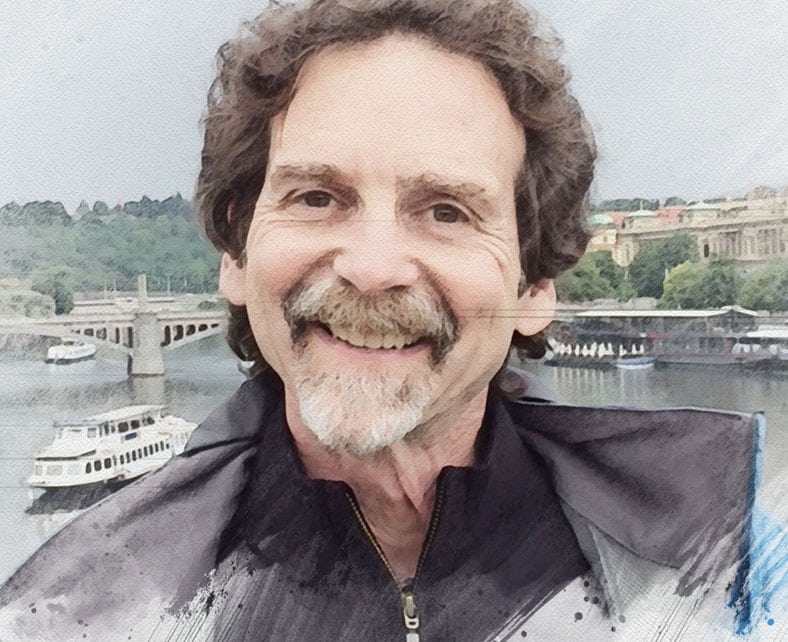
My Squirrely Therapist: A Retired Psychologists Reflection

A Whole Different Form of Therapy 

Squirrel, my current therapist is wise, patient, authentic, and non-judgmental at least most of the time. She doesn’t impulsively rush to conclusions. She affords me time to process my own experience which I appreciate. Unfortunately, and without exaggeration, she also seems to be totally devoid of empathy. She never gives me the reassurance that she can imagine what it must be like to be me. Nevertheless, she will likely be my last therapist. I’m 76 years old, and despite Squirrel’s feline lack of empathy, I am making progress. I am able to see her whenever she chooses to leap off the bookshelf and make herself available.  

I’m curious about her detached approach. I thought I’d seen them all. Prior to retiring, I was a clinical psychologist in private practice. My graduate program required all students to have 45 hours of individual therapy. I loved it and engaged in more, a whole lot more, than what was required. At various times I was in Gestalt Therapy, couples group therapy, dream analysis, encounter groups, and other therapies. I’ve engaged therapy dogs as co-therapists. I know the psychotherapy territory and am an avid supporter of people seeking to grow and evolve into their better selves. Still, after retirement and at the end of my traditional therapies, I sensed room for continuing psychological growth. Then along came Squirrel. 

I don’t know if Maine Coons have ever been licensed as therapists, but I wouldn’t be surprised. Squirrel is a natural at encouraging me to evolve. She embodies all the qualities of a Rogerian therapist allowing for, and even encouraging, transference in the service of increasing self-awareness. I ask her if she likes being petted, and she simply fixes her gaze at me, allowing me to answer my own question. The reason that I ask her if she likes being petted is that Squirrel makes a habit of coming close to visit just out of arm’s length. If I reach out to pet her, she moves a bit further away. Very occasionally, she will allow me to pick her up and pet her for a minute or two. When I do get to hold her, she purrs and shows me her belly. She can be so very inviting, but only occasionally. I want to tell her everything. After a couple of years of this routine, I thought to rename her “Princess Ambivalence,” an appellation befitting her decidedly approach/avoidance posturing.  

It occurred to me recently that my self-esteem was suffering because of my inability to “win over” Squirrel. Despite offering nothing but kindness, soothing words, the occasional pets, and cat treats, she tends to keep her distance. Her ambivalence has tested my patience, my control issues, and ultimately, my ability to forgive. I can visualize her now and imagine she’s thinking that she doesn’t like to be called Princess Ambivalence. As she stares silently at me, encouraging me to process my experience, I become aware that I had been dealing with my hurt feelings by passive-aggressively renaming her Princess Ambivalence.   

Squirrel provided me with the time to process my judgmental reaction to her simply by acting like a cat, and eventually I realized that both Princess and Ambivalence were pejorative terms, reflecting my frustration and hurt feelings. Thankfully, Squirrel is too seasoned a therapist to engage in countertransference. She simply fixed her gaze at me again until I understood my own behavior.  

I’ve known for some time that insight is not enough to facilitate change, and apologies are an insufficient indication of genuine transformation. If I were to have truly internalized my experience, I would have to demonstrate evidence of real change in my interspecies relationship with Squirrel. I decided, therefore, to rename her again with a less judgmental and mean-spirited name. Her new name is much more descriptive and emotionally neutral. She is now, “Proximity Cat.”  

 She stares at me, and we both understand that her new name reflects my progress but is also an insufficient marker of my change. 

Happily, my therapy continues, however; I know I’m not done. As Proximity Cat continues her deep gaze, she helps me understand that I have a sense of entitlement that enables me to believe that I have the right to change her name. I’m not yet ready to call her Squirrel, although I hope to get to that place in time. I am, as Proximity Cat reminds me on a daily basis, still a work in progress.  

Kay Ingamells on the Wonderfulness Interview in Narrative Practice

Lawrence Rubin (LR): I’m here today with Kay Ingamells, a therapist, educator, and author who lives in New Zealand. We’ll be chatting today about the Wonderfulness Inquiry, a fascinating and foundational intervention embedded in narrative practice. Hi Kay.  

The Wonderfulness Inquiry 

Kay Ingamells (KI): Well, that’s actually a very big question, so I’d like to begin by saying where it comes from. As most people reading this may realize, David Epston, one of the founders of Narrative Therapy, originated the Wonderfulness Interview. It came about through necessity as he found himself in live interviews with children and families where he knew that what he had to bring was not going to be sufficient, and he needed to invent something pretty much on the spot. That evolved over time into a very clearly formulated, distinct practice, which, to my mind, is as important as a Narrative Therapy practice as externalizing is.  

It’s absolutely foundational to my practice, and I say inquiry, not interview, because it is an inquiry into what is remarkable about somebody. It’s an inquiry into what David Epston would call their moral character, or what Sasha Pilkington would call their virtues. So traditionally, for the last however many decades, the way that people have come to know people through therapy has been through a particular lens, which David has called the crisis of representation. Here, people are represented, to you, by you, to themselves in therapy interviews, through a lens of pathology or stigma or a diagnosis. 

A wonderfulness inquiry turns that tradition of focusing on the crisis or symptoms on its head. And so what I’m doing at the beginning of an interview, whether it’s with a child or young person or a family or an adult, starts from the other direction. I might begin with a question like, “before we talk about the problem today, and I know that the problem is something that you’ve come here to talk about, would it be okay if I was to get to know you in another way all together? (I’ll relate this to working with a child with a family present) Could I ask you what’s wonderful about Billy? What is it that I would come to know is wonderful about him if I was to get to know him as well as you do? The reason I’m asking this is because people don’t come to therapy without having had life experience. As parents, you will have worked through all sorts of things in your life, in your lives, individually and as a family, and you will have wisdom and qualities and abilities to bring to what we’re dealing with today. And if I know what those are, we can put our heads together and think about how we might use Billy’s wonderful abilities and your family’s wonderful abilities together to deal with this problem.” That’s one of the ways I might begin it. And hopefully that gives you a sense of what it is. 

LR: It does indeed. A little bit earlier on, you drew a distinction between an inquiry and an interview, and while some may use those terms interchangeably, my sense is that they are very different processes for you. 

KI: In several ways. The first is that this is something I’m doing with somebody. I’m not interviewing somebody. I’m inquiring with people. We’re inquiring together. I’m not bringing in the expectations of where I think we will end up specifically. I don’t have a list of questions in front of me. It’s an inquiry. It’s an inventive, imaginative inquiry that really stems from narrative values about being decentered as a practitioner, valuing people’s knowledges, and wisdoms. It’s about connecting to and bringing out their insider knowledge. When I say inquiry, it occurs inside of a larger narrative inquiry, which is about the development of a counterstory. And the counterstory is an attempt to co-create a narrative with the client, with the parents of the client, that counters one of pathology and problems. 

Wonderfulness inquiries or virtue inquiries are so helpful in interviewing people because the conversation is directed at what’s wonderful about them, what you appreciate and respect about them. With older people, you’re discovering who that person is as a character, a moral character. You are characterizing them as a protagonist in their own story; champions in their lives, who they are as a resource, who they are––someone they can be proud of in their lives. Then you’re taking that character and using it as part of the larger counter storying endeavor or process. 

LR: When I think of moral, and I may mistakenly be conflating it with morality, my sense is that when you say moral character, it’s far deeper than right vs. wrong.  

KI: Yes, that’s a really interesting point. I don’t mean moral in that moral sense of right and wrong. Instead, it draws on Aristotle’s ideas of virtue. When I say moral, what I really mean is how people wish to be known. It’s about the values and virtues we take pride in; those that we’re living our lives by, and that might be something like courage, honesty, integrity, kindness. Most people live their lives or attempt to live their lives in these ways. 

Preferred Identities and Counterstorying 

LR: Is this what the narrative clinician would refer to as a preferred identity. 

KI: Yes, I think those two could probably be conflated. Someone’s moral character or preferred identity is based on how people have enacted it. It’s not just how somebody would wish to be, it’s how they have actually evidenced virtues in their lives. Part of a narrative wonderfulness inquiry is to actually bring forth how people practice those things. It’s about looking for stories which really bring to life how somebody is enacting those virtues in their lives.

LR: Some of our readers may be familiar with the notion of re-membering conversations, so I’m wondering how these may be related to wonderfulness inquiries. 

KI: I think that’s a very interesting question.Whilst distinct practices, you can absolutely bring re-membering inquiries or conversations into a wonderfulness inquiry, you can also use internalized-other questioning. Quite often, clients do not bring people with them to interviews, and you need an audience to have these conversations. So, it’s helpful to interview people about what other people would admire or respect about them, or believe what is wonderful about them. You can use a re-membering conversation for that. I don’t do that exactly in a wonderfulness interview, but I am asking the young person to look back at how other people have seen her. 

LR: Although our client might not bring physical people into the therapy space with them, they do bring internalized others with them. So you might inquire into who first recognized some of the client’s virtues in elementary school? Or who wouldn’t be surprised that you have accomplished what you have at work? Who would not be surprised that you’ve become the young person that you are? 

KI: Absolutely! It’s a key thing to do at the beginning of the session with a child or young person or family as part of the counter storying endeavor. For instance, you could just ask somebody what their strengths or virtues are. That would become a very flat interview. You could say a bit more about it. Again, that could be quite flat, and you could end up with a thin interview, as narrative therapists call it.  

You have to bring narrative counterstorying skills to it and be really persistent in the questions you ask people, because these are not things people ordinarily talk about. People’s virtues sometimes are only ever talked about at their funeral. So you have to give people lots of prompts and lots of follow-up questions; be really persistent and ask imaginative questions. 

LR: I would imagine that the more a client is entrenched in what the narrative therapist calls the thin, problem saturated story, the harder you have to work to draw them into these conversations. If I was the client and you were asking me to identify the qualities of my moral character or my virtues, and I was in a particularly depressed space, I might say to you, okay, I’m just not in a place where I can even think about something positive about myself. How persistent must you be? 

KI: It’s very important if you’re going to set this up for success, to give a really strong preference. I will start by ideally phoning somebody before the first conversation and asking them what they think about that; then when it comes to how; there’s a time and place for everything. I would err on the side of persistence because, as I said, people aren’t used to these inquiries and don’t know how remarkable they can be. It does take something to really get people engaged in this kind of conversation. 

With the example you gave, and I’ll call you Frank, “Frank, you know, I realize that you’re feeling so depressed. I appreciate that. We’ll have plenty of time to talk about that shortly. Would it be okay for you if we just took a little bit of time for me to begin to understand what it is that you’ve brought to bear against this depression? For, however long you’ve been experiencing it, I know that you will have knowledge and practices, and you will have wisdom that we can really use together to help in the rest of this conversation and in our other conversations.”  

I’m always seeking consent and judging whether or not somebody is willing and ready to engage in this different kind of conversation. I take my cues carefully.  

The Legacy of Wonderfulness Inquiries 

LR: What is it about Kay that has attracted you to this particular intervention? 

KI: That’s a question I wasn’t expecting. There are so many ways I could answer that question, but what I would say in short, and it is part of a bigger question about what attracted me to Narrative Therapy, is that I’ve always disliked the way people are always talked about because I’ve always believed in the beauty of people. One of the things I’ve discovered since really ingraining wonderfulness inquiries into my practice is that I’m meeting people who are so much more wonderful than I was meeting before. I meet people who are so much more remarkable than I was meeting before, and that brings me great joy. 

I would also say that I really value connection. There was an article that David and I wrote many years ago about bringing together strength-based practice with narrative practice and talking about how we might story peoples’ strengths. That has a bearing on this interview because David asked me similar questions, and I found myself reflecting back to my grandfather, who I never met. He was a residential Canon in the Church of England, and he set up the first youth work programs in the UK and youth camps after the Second World War. My sense of him from stories I’ve heard is what he loved was connecting people and connecting people to spirituality and to God. That’s not for me since I’m not religious, but I’d like to think that I follow in his footsteps in some sense. 

LR: Well, I wish we could spend some time talking about your grandfather, but my guess is that many of the qualities that helped him to be effective in what he did are the ones that you’ve inherited. 

KI: Well, thank you, I’d like to think so. I only have my mother’s memories to go on, but this actually brings us to something else that’s really important about wonderfulness inquiries. When I’ve heard really evocative stories about someone’s wonderfulness in action, I’ll ask about the legacy of those wonderfulnesses. I might ask, “has someone passed this down to you or taught you how to be brave, for example, or how to be kind, or how to keep going in the face of fear?” And then all sorts of stories emerge, and it can be very moving with the family present, because, again, these are things people have very rarely talked about, not in this way. They might have been mentioned in passing or you might have been told that your grandmother was X and did X, but not in relationship to the rest of the family or the young person. I could give you a couple of examples if you like. 

LR: Absolutely! 

KI: I remember many years ago—and this will appeal to American audiences—working with, a young woman and her mother. TI was conducting a wonderfulness inquiry during the first session, our first conversation, with an American family—the young woman had been born in New Zealand, was about 15, and had a commitment to social justice and social causes. I asked the mum if she had any idea where her daughter’s commitment to social justice comes from?  

She started telling me about herself and her own history as she’d done lots of volunteering work and particularly around the area of domestic violence. Then I said, “who handed it down to you?” She paused and thought, because it didn’t come readily to mind and said, “of course, my father was a factory owner during the McCarthy era in the United States, and he was told in no uncertain terms that he needed to sack his workers who were presumed to be communists. He refused to do that.”  

This young woman was hearing for the first time in a storied way how her commitment to social justice had been nested in her grandfather’s experiences, his whole legacy. As a young person, especially in the individualistic culture we live in, you can imagine the difference it makes to have that sense of connection and belonging  to a group and to a tradition. 

LR: As you talk about tapping into the legacy that contributed to this client’s sense of self, I think we can also consider how a client, maybe not a child or a teenager, can influence other people in their lives. In other words, asking an adult how they would like their children or grandchildren to experience their own qualities? It’s almost like embedding a time machine into the wonderfulness inquiry.  

KI: A time machine is a beautiful way to talk about it! And that’s exactly right––a reverse legacy. You can then say to a parent, “has Alex inspired bravery in you?”  

There’s also times when I’ve gotten young people to take on a problem by demonstrating their wonderfulness to their parents. For example, I asked the five-year-old, who’d been really brave at the dentist, and whose father was not feeling brave about going to the dentist, to take his father and hold his hand and give thanks. 

Playing Into the Wonderfulness Inquiry 

LR: How has your style of wonderfulness inquiry evolved as you’ve grown as a therapist? 

KI: Oh, that is a very interesting question. I think in the beginning, I was experimenting with the basic question. “If I were to get to know X as well as you do, what would I come to appreciate and respect about them, what’s wonderful about them?” There’re so many creative ways to weave wonderfulness inquiries into narrative interviews, and it’s not like they are separated and divided into discrete little boxes. They are overlapping practices that get woven together in improvisational and imaginative ways.  

I’ve become more fluid and fluent in bringing forth wonderfulness in many different ways depending on what the situation best calls for. For instance, I remember doing an internalized other interview with a woman in her early 40s who had experienced horrendous abuse––sexual abuse and neglect–– in her family. This one character, her grandmother, was a person who really saved her and saved her sense of who she was. I interviewed her as if she was her grandmother, and it was in that internalized other interview that her own abilities, her own wonderfulness, really became alive for her. From there the therapy was a downhill journey. She had her grandmother alongside her.  

You need to learn specific practices like externalizing, wonderfulness inquiries, internalized other interviews, how to search for sparkling moments or unique outcomes, how to counterstory, and of course, how to formulate really good imaginative narrative questions. Those are all practices. It’s like learning a musical instrument; if you want to get to the stage where you’re an artist, you have to learn and then practice the basics and become comfortable improvising. You learn your scales, you learn your set pieces, but at some point, to really be performing it, you have to be able to integrate that in an improvisational fluid way.  

For me, there’s no limit to how you could use wonderfulness inquiries, and if you think about it, it’s about believing that people are not their problems. The problem is the problem.  It’s a whole way of thinking about people, of operating inside of that stance, which is quite different. It’s like a doorway into another country than traditional psychotherapy interviews.  I’m not meaning at all to give traditional psychotherapy a bad name at all––it’s just that it’s a very different orientation. 

I don’t have a playroom at present, but I can see so many options for kids for that––what’s important to remember is the audience. What’s important is that the child is hearing this, or young person’s hearing this from others; the importance is that it’s brought to life. I’d be doing that with parents or other people in the room co-creating that story with a sandtray or puppets. I’m very, very playful in my practice which is the key to narrative therapy with children. The foundational book in narrative therapy for working with children is called Playful Approaches to Serious Problems.  

I was talking on the phone this morning with the mother and her five-year-old little boy, who I will call Eli. I met with them about six months ago, and he was dealing with enormous fear about being on his own in the house and at school, and it came upon him from seemingly nowhere. What we did was to bring a lot of playfulness into how we engaged with the problem, because the important thing to remember about wonderfulness inquiries is that they’re just the beginning. You’re bringing forth stories of someone’s wonderfulnesses so you can then engage those in standing up to the problem. Otherwise, to quote Tom Carlson, you just end up with a cute interview.  

But where does it go in terms of engaging with the problem? With this little boy we came up with all sorts of imaginative ways of engaging with the problem, and one of them was that he and his father were going to make tiger masks and go out in the garden to scare the fears away because he had identified that the fears came from the garden, and he actually told me in the first interview that an alien had come down and taken one of the worries out of the tree in the garden. 

I was using what he said, the environment of the garden,his bravery, and turning him into a tiger with his father as his supporter and bravery-giver as well. They would go out every night after his dad came home from work and put on the tiger masks which they made together, which was very important. They tore around the garden, screaming and grumbling and chasing away the worries. Mum told me this morning that he had found these masks in a drawer the other week, and he pulled them out and hung them on his bedroom door. This was six months later which is quite a long time in a five-year-old’s life.  

LR: In the case of this brave little boy who, what were his moral qualities; his virtues that you were able to tap into? 

KI: I had interviewed them extensively about his wonderfulnesses, and there were so many. When I have a child in the room, I will sit on the floor with them and I will draw pictures of what the parents are talking about to bring it to life. This child was a great listener and of course, very brave, which was the key thing. They gave me some wonderful examples, like he was very good at trying new things and had no limitations in what he was willing to give a go to. It was the bravery that I zoned in on and knowing that he would probably give this a go because he always gave things a go. Especially his love of tearing around and being outside in the garden. 

LR: From what you’re saying, the more you know about a person, the more useful the wonderfulness interview becomes because it’s a reservoir of resources that you can help the client tap into to stand up against the problem. 

KI: Absolutely. I take very detailed notes in my sessions, so I have that clearly written down to refer back to at any point in time. You can always dip back into the first interview for both of these if we need them. 

LR: I always go back to something that David Nylund said in this regard which is something like, “who gets to decide what the evidence of effective treatment is?” In this instance with Eli, the evidence of the outcome was hanging the masks on the door of his room. I wonder if this would have been as effective had the clinician not been grounded in narrative practice.  

KI: That’s a very kind and interesting question. And I say this boldly, but if the clinician is not practicing inside of a narrative stance, they’re not doing a wonderfulness interview. It’s something else, and I’m not saying that’s bad. I’m not saying it’s not helpful, it’s just not a narrative inquiry. There’s a fantastic article by Victoria Dickerson called Positioning Oneself Within an Epistemology: Refining our Thinking about Integrative Approaches. It’s an argument against eclecticism.  

To be practicing on a particular side, a particular framework, you have to be sitting inside of the values, principles and philosophies of that way of practicing. That’s not saying you cannot take other practices from other modalities and kind of graft them into your practice, but if I’m a CBT therapist doing the wonderfulness inquiry, then I’m not doing Narrative Therapy. Using a wonderfulness inquiry without any anchoring in narrative therapy might yield an interesting conversation. But where would the conversation go? 

A History of Standing Against Oppression  

LR: Can you share the last time you used the wonderfulness inquiry with an entire family present where it was clear that the client wasn’t the only one in the family who was struggling? 

KI: Yes, I could give an example, but I won’t give too much detail. It was a typical teenage problem of a young person vanishing out the bedroom window in the middle of the night and hanging out with people that the parents would rather they didn’t. And of course, when you come to wonderfulness inquiries it would be silly not to draw on the wonderfulnesses that the whole family has to bring against a problem that the whole family is concerned about or involved in. 

What was really lovely about this family was when we looked at the genealogy of this young person’s wonderfulness, she was so appreciative of what her parents had contributed to her—the wonderfulness of the entire family. The family had really worked together as a team which had come from doing amateur dramatics together and playing a lot together. Her father used this wonderful term—“we’re really good at walking problems down.” So, I took that term as a headline to the counterstory that this family had what it took to walk problems down. We then talked about other problems that they had walked down. I then interviewed the children about stories from their lives, about where they had used this ability that their parents had handed down to them. 

In this case, you’ve got the children really speaking to their appreciation of their parents and how they’ve taken these abilities and use them in their life. My sense was that this young person felt so privileged in the interview that I really think it enhanced what we call in New Zealand in Māori her mana, her sense of being respected by others. Then I wrote them a narrative letter following the interview, which really brought forth all of this. And then that was it. Problem over! 

LR: A traditional, or modernly-trained clinician might look at the genetic precursors to a family problem, but you’re talking about the genetic predisposition to wonderfulness which is entirely different and far more hopeful. 

KI: There are wonderful things, what I call counterstory threads and counterstory headlines, that you can pull out which the whole of the work can then hinge on. I remember interviewing a young woman, I think she was about 17, about anxiety, and her mother was present. We brought her grandmother in for the next session. 

What emerged was that there was this history of women in the family having strong backbones. So, I interviewed them all about this history and then how they’d use their strong backbones, because it turned out that anxiety was something they all encountered and had used their backbones to stand up against. Now you’re really working with how a family history of engaging with the problem can be used to support a young person engaging with a similar problem. It never ceases to amaze me that these stories, and this history, are rarely ever known prior to these interviews. They might have had glimmers or snatches, but not in a way that is a resource like this. 

LR: I can see this being so helpful in working with families whose ancestors suffered from and stood against systems of oppression. 

KI: Absolutely, because as a narrative therapist, I do see problems inside of a social, political, cultural context, but not inside the individual. A problem has its beginnings, as you say, sometimes generations back, and it’s located in history. To be able to locate it there can be so liberating for people and then, as you say, engage the whole history of how a community, a family may have engaged with a problem over time. 

That is particularly true for Māori families where there is such a strong connection to ancestors and the people who walk with you and ancestral warriors and people who’ve engaged with colonization and practices of colonization. People can often trace back their ancestry to a particular ancestor who perhaps was involved in signing the founding document of New Zealand, the Treaty of Waitangi. 

I’m thinking again of that young woman, Fatu, who came from a very poor Māori community. Many of the young people around her were in dire straits. One of them had recently killed himself. We located the problem at one stage inside of racism. She told me the story in a subsequent session about how she went to a party, where it was mostly White kids there, and she was feeling really comfortable. She was with her friends., and then somebody said something really racist. We were able to talk about what happened at that party in terms of racism, not in terms of anxiety or how she could be more confident in situations like that. I think that meant the world for her to talk in terms of race like that, and allowed her then to engage her voice of opposition, of outrage, of agency against that problem and to talk about it because how many young people would have the confidence to talk about a problem like racism, unless a therapist brings that up and locates it there? 

LR: As you’re talking, I had the image of a tree and how a wonderfulness inquiry can help a person sprout branches of hope while remaining anchored at the roots, their ancestors. 

KI: That’s just lovely. And, you know, you think about the liberal, individualistic world that we live in, and this has never been more needed. Think about how young peoples’ measurement for what it is to be successful in the world mostly comes from social media. Today, it’s all about perfection and success for measuring up to these standards, which are never unique. They are packaged versions of who people are. One of the things about wonderfulness inquiries is if you really story in depth, what comes forth is a picture of that young person which is unique to them. They can aspire to be themselves or be inspired to be like their family or their ancestors, not like the influencers on social media. 

Standing Up Against Suicidality 

LR: Are there any clinical situations where you would NOT use a wonderfulness inquiry? 

KI: In an emergency such as a young person who is actively suicidal. That’s not to say I wouldn’t do a wonderfulness inquiry, but I almost certainly wouldn’t begin there. As I said, a wonderfulness inquiry is part of a whole way of seeing the person, so I would be weaving those questions all the way through the interview to bring forth their wisdom, strengths, and abilities. Where else is it more important to do that than when somebody feels that life is not worth living? But it would be a different inquiry, and that would go into no doubt, reasons for living. So, it would simply have a very different flavor to it.  

If there were other people in the room, I would be only using them in that emergency as much as possible to bring forward a young person’s resources, abilities and strength in the face of what they’ve been dealing with in life that’s led them to feel that they might wish to take their own lives. 

LR: In such a situation, how would you respond to a critic who might say, “it sounds like you’re just trying to talk someone out of their symptoms—their wish to die?” 

KI: Symptom isn’t a word I would use. However, it’s absolutely not about ignoring the problem. It’s how you come up on the problem through a different lens, one about what somebody has to bring to put against it. You’re just more resourced against the problem, and  understand that they may have resources to use against it, and then you fiercely engage with and on behalf of the person with the problem. It’s not as direct. I’d like to think it’s a more secure, or more cleve way to go about it, and I don’t mean that in an arrogant way––maybe it’s a more nuanced way.  

Paying Forward 

LR: As we wind down, Kay, what advice would you give to new therapists who may not fashion themselves as creative or spontaneous, and who would see something like a wonderfulness interview or narrative practice, for that matter, as too different or too uncomfortable? 

KI: Just like most things, it requires application and practice. If you want to do something in a way that is really interesting, like play an instrument or play tennis to a high standard, therapy is no different. And why should it be? I think what I’d say is there’s a distinction in therapy between a paint by numbers kind of therapy where you have a method and a craft where you’ve developed skill to a reasonably high level, and then there’s art or artistry.  

David Epston, Tom Carson, and I teach a worldwide Zoom program called The Apprenticeship and the Artistry of Narrative Practice, where we teach people how to go from craft or even paint by numbers to artistry. I would also suggest his book, along with David Marsten and Laurie Markham, Narrative Therapy in Wonderland.  

When I first met David 23 years ago, I asked him what his secret was because I was just so mesmerized by his practice. He sagely said to me, and I remember his tone even now, “practice, practice, practice.”   

LR: On that wonderful note, Kay, I will say thanks so much for sharing yourself with our readers. 

KI: It’s been an absolute pleasure to talk with you today. I have so enjoyed your questions and the conversation. Thank you for inviting me.   

References 

Delano, L. (2025). Unshrunk: A story of psychiatric treatment resistance. Penguin Audio.   

Epston, D. (2025 release). Notes on moral character and wonderfulness. Journal of Contemporary Narrative Therapy, October, 56-62. 

Epston, D. (2025 release). Wonderfulness interviews: An origin story. Journal of Contemporary Narrative Therapy, 18-55. 

Epston, D., Markham, L., & Marsten, D. (2024).  Narrative therapy in wonderland: Connecting with children’s imaginative know-how. W. W. Norton & Company. 

When the Therapist Shares Too Much 

Claire was working on her licensure, and she asked that I supervise her throughout the process. I’ve been lucky to have strong clinical mentors across my career, and so it felt like an honor to be asked for help. I was surprised to receive a text message from her first thing on Monday morning, “Can we touch base soon? I think I really messed up.” 

My stomach tightened. I wondered how badly things could have really gone. Claire was a new therapist, but she had strong clinical skills. I hadn’t expected the urgency of this request. Soon after, she came into my office holding back tears. “I’m too close to one of my clients,” she spoke in low volume. “I don’t know how it happened. It’s not romantic, but I’ve told him about my family and my own problems. Now when we talk… it feels like a friendship. He’s been giving me advice. I screwed up and I don’t know what to do.” 

I took a breath, “You made the right choice.”  

“I know,” she said. She mistook my response for sarcasm. “I don’t know how I let this happen.”  

“No. That’s not what I meant. You had a choice between embarrassment or secrecy. To share this with me or keep it to yourself. It’s a hard choice, but you made the right one.” 

We explored the reasons why the relationship with her client had changed and what to do next. Her willingness to feel embarrassed, and to admit her mistake, was the first step towards repair. It was the first of many such conversations I’ve had since, both with new therapists and advanced ones, too. It’s also a conversation I’ve had with myself. 

Leaving Our Post: Why Unskillful Self Disclosure Occurs 

Unskillful self-disclosure is common; probably more common than we think when considering how many clinicians choose the path of secrecy over embarrassment. Choosing embarrassment by admitting our mistakes means walking against the wind, and so many therapists choose to have the wind at their back.  

But how does this happen? Despite our good intentions, why do we leave our therapeutic post? There are probably many reasons, but the first is that the rules of healthy relationships are broken in good therapy. These are the rules of give-and-take, or reciprocity. When reciprocity is absent in our personal relationships, we tend to conclude these relationships aren’t desirable. Whether giving without receiving, or receiving without giving, these are usually signs that something has gone terribly wrong. If someone talks about themselves but never asks a question in return, we notice it. Somewhere in the back of our mind there’s an accountant who keeps tabs. And if this accountant doesn’t count every penny, they help us determine if our relationships are in general balance. 

In therapy, our job is to fire the accountant. While reciprocity is beneficial in personal relationships, in therapy it undermines our ability to maintain focus on a client’s problem. So, we learn new conversational habits. We temporarily adopt a non-reciprocal style of relating to help our clients. It’s strange to acknowledge, but dysfunctional behavior outside of therapy is useful behavior within it. 

Of course, some therapeutic approaches do emphasize mutuality and appropriate therapist disclosure. But even within these frameworks, disclosure serves therapeutic goals, not the therapist’s emotional needs. This distinction matters. If good therapy requires temporarily implementing this imbalanced dynamic, it shouldn’t be surprising that we struggle to make this adjustment. We’re asked to do something that, at its core, just feels wrong. Our inner accountant balks.  

A second reason unskillful self-disclosure occurs is connected to the first, and it can relate to the problem of therapist loneliness. We are not like other professionals and therapy is not like other jobs. While our individual temperaments vary, most of us become therapists because we’re drawn to people for one reason or another. This draw towards others might seem like a good fit for a career in therapy, and sometimes it is, but other times, therapy can be a lonely place. Back-to-back appointments in empty office buildings or remote work from available bedrooms can bring with it a great silence. 

And this silence isn’t only environmental. In our conversations with clients, we’re required to strategically deprioritize many of our reactions. This doesn’t mean these relationships are insincere, but that large parts of ourselves don’t participate in our discussions. When personal reactions aren’t in service to a client’s goals, we do our best to restrain them. We ask them to hide. 

While we all have a strong interest in human connection, we’re met with more environmental and relational silence than expected. Loneliness is what happens when longing meets absence, and in therapy, there can be a great amount of both. 

Returning to Our Post: The Art of Repairing Unskillful Self Disclosure 

Understanding how unskillful self-disclosure happens is only half the task. The harder part is knowing how to return to the therapeutic framework without damaging the relationship. Once we’ve come to the realization that a clinical relationship has lost its professional shape, what can be done? This problem is difficult because while solving it, we simultaneously introduce three new risks into the therapy. 

The first is that many clients enjoy having insider knowledge about their therapist. They may feel this is the basis of their rapport. To have insider knowledge is to feel special, and to lose access means losing this feeling of specialness. With open doors now closed, the sound of turning locks can create feelings of rejection. Feeling pushed away can damage the therapy, even while we’re trying to repair it. 

Another risk is introduced when clients are more comfortable with the reciprocal dynamic. They may prefer to share the spotlight rather than feel its bright circle pointed at them alone. Reducing self-disclosure will increase the number of empty spaces in the conversation. There will be more silence, and with more silence, more discomfort. When we start walking back to our clinical post, new intensity emerges. 

The last risk is that a client might decide that they’re to blame. They might conclude there’s something uniquely wrong with them if their therapist behaves differently with them than with other clients. Sensing that they lie at the center of their therapist’s dilemma, they might experience shame. It’s a shame that tells them that somehow, they’ve hurt their helper. 

Whatever steps allow us to walk back to our clinical post, it’s important to think about managing the risks of rejection, new intensity, and shame. There’s no perfect script for this conversation, each therapeutic relationship requires its own approach, but one framework I’ve found useful centers around four steps: 

Step 1: “I haven’t done a great job protecting your therapy…” 

Expressing this step demonstrates that our aim is to protect their therapy, and to implicate ourselves at the heart of the problem. To name that we’ve failed to guard their therapy lessens the chances the client will blame themselves. 

Step 2: “and so I’m going to pull back on how much I talk about myself…” 

This signals the incoming adjustment. This statement is directive in nature as we’re not asking the client for permission with this new course of action. We’re telling them it’s happening. This is the first act of stepping away from the reciprocal dynamic, and instead, returning to the clinically imbalanced one. 

Step 3: “but I want to let you know how to interpret this change.” 

This step is particularly important because it helps reduce, though not eliminate, the new intensity that can emerge in the therapy. The client is being prepared to understand what new interactions mean, but also what they don’t. 

Step 4:  “The truth is that my enjoyment of our work hasn’t decreased, but my investment needs to increase.” 

This final phrase reiterates that our adjustment reflects a stronger commitment to the client, not a weakened one. We’re disengaging in the wrong areas and reengaging in the right ones. We’re subtracting non-clinical interactions to deepen the clinical purpose. By expressing that our enjoyment hasn’t lessened, we maintain the appropriate degree of specialness that exists in every meaningful relationship. 

Conclusion: The Ongoing Practice of Returning 

Addressing unskillful self-disclosure isn’t a single moment but an ongoing practice. After we’ve initiated the repair, it’s important to continue monitoring our own pulls toward reciprocity. The loneliness that may have contributed to the initial drift doesn’t disappear simply because we’ve named the problem. 

This is where consultation, supervision, and our own personal relationships become essential. We need spaces where we can acknowledge our humanity: our loneliness, our need for connection, our own vulnerability to unskillful self-disclosure. When Claire came into my office, she made the right choice because bringing it forward made the repair possible. 

I’ve learned that therapeutic work isn’t about being perfect. It’s about being honest enough to recognize when we’ve drifted and courageous enough to find our way back. Every time we effectively manage our need for reciprocity and our loneliness, we strengthen our capacity to help our clients. Even when we don’t prevent unskillful self-disclosure, if we practice repair, we remind ourselves that while we may fail at our post, we’re still worthy of returning to it. 

Crossing Zero: The Art and Science of Coming Off—and Staying Off—Psychiatric Drugs

Leaving Behind the Disease Identity

I hope I’ve succeeded in conveying the message that psychiatric drug withdrawal is often more than pharmacology, dose reductions, and withdrawal symptoms. For many, stopping medication also represents a departure from seeing themselves as ill and lacking agency. This important process can be challenging if those around them continue to embrace the medical model and view them through the lens of illness as a “patient”. 

Even if this doesn’t apply to you personally, I encourage you to keep reading. It will provide you with an understanding of the daily challenges faced by those who do. 

I recall a former client, Ulrik, who arrived at my office one cold and grey Scandinavian February morning, wearing the broadest smile. He had just been to the student counselor the Friday before and was thrilled to be re-enrolled at university, having recently tapered off the antipsychotic that for so long had numbed his emotions and the cognitive abilities he needed to study. Yet it wasn’t just his return to university that was the source of his smile – it was his encounter with the student counsellor. She was the first person he’d met in years who didn’t know he had once been a psychiatric patient diagnosed with – and now fully recovered from – what psychiatry labels paranoid schizophrenia. This made all the difference in how she saw him. 

Like many people with psychiatric labels, Ulrik’s diagnosis had levied such stigma upon him that his completely normal emotional fluctuations and reactions were often misinterpreted as symptoms of illness. 

Those around him had grown accustomed to seeing him through the lens of illness, constantly scrutinizing and judging him, and his freedom to act naturally was heavily limited as a consequence. But for once, this way of being classified in advance as a sick person was gone. For Ulrik, it was a relief not to be defined and judged by his diagnosis. “She saw me as a regular person with aspirations, dreams, and a future full of possibilities. I haven’t felt this way in years. She had expectations of me, and that made me want to try,” Ulrik said, clearly emotional upon realizing the contrast with how many of his friends and relatives still sometimes viewed him as fundamentally sick and defective. 

That Monday morning, our entire hour together centered on the profound impact of others’ perceptions and how they shape a person’s path to recovery. “I also need to be part of something where I am need-ed and people count on me, where my contributions are valued and expected. People with jobs and families can easily take that feeling for granted – but for me, it’s what I long for most,” Ulrik added thoughtfully. 

Breaking free from over-identification with a diagnosis can be challenging, especially if the important people in your life continue to view you through that diagnostic lens. One common obstacle is when loved ones undergo so-called psychoeducation, where they are “educated about the illness” and where a person’s supposed “lack of insight” is interpreted as part of the illness itself. 

The question of disease identity – becoming so intertwined with a diagnostic label that it becomes an identity – is too big to fully cover here, and frankly, I believe it’s not appropriate for professionals to intrude into such deeply personal territory. Instead, we should leave the subject to those who have lived through it firsthand. Fortunately, one such book has just been written by American author and director of the Inner Compass Initiative, Laura Delano, titled Unshrunk

Research also indicates that family dynamics can significantly impact the recovery process. A meta-analysis dating back to 1998 showed that a family’s degree of what’s known as “expressed emotion” could predict the likelihood of relapse of psychosis, depression, and eating disorders. Expressed emotion is defined as “emotional over-involvement and critical communication from family members and closeones.” In such cases, addressing the issue with individual psycho- therapy can inadvertently problematize the individual who may merely be the bearer of symptoms within a broader family dynamic. Family therapy and Open Dialogue may be necessary. 

A Strategic Choice

Many people have to be strategic about who they involve in their efforts to taper off psychiatric drugs, knowing that the decision may not be well received or supported by everyone around them. It’s understandable yet unfortunate that this is sometimes the case, as support from loved ones is crucial to both coming and staying off psychiatric drugs. 

From loved ones, I often hear that the powerlessness and fear of revisiting past struggles from before the medication can be a difficult combination. For both parties, I hope this chapter has eased the feeling of powerlessness and that together you can see concrete, practical steps to take if withdrawal and emotional re-emergence becomes challenging. The situation is likely new and unfamiliar to both of you, and there is often an element of having to chart a path through it together. 

And to loved ones: Remember that simply being present as a human companion offers a powerful antidote to low mood, racing thoughts, and anxiety. In the end, the same principle applies to any form of sup- port during difficult times: The more atypical and to you incomprehensible your loved one’s reactions and behaviors, the more crucial it becomes to remain open and curious about what they are experiencing. Strive to look beyond the surface – to the emotions, experiences, and unmet needs they are grappling with. 

This excerpt is published with permission from the author, Anders Sørensen. 

Measuring the Unmeasurable: How to Know When Therapy Is Working?

Ever wonder if therapy is really helping? I’ve sat on both sides of the couch—first as a client, now as a clinician—and I’ve often heard the line, “Therapy isn’t working for you.” Usually, that says more about the person saying it than about the reality of what’s happening on the couch. 

Izzy’s Story: Healing on Your Own Timeline

This question came into sharp focus after a session with a 36-year-old client I’ll call Izzy. Not long ago, he shared that his mother had remarked, “You’ve been in therapy for two years and it’s not working.” Her words landed heavily. Izzy had come to me less than 24 hours after an unthinkable loss—his girlfriend had been killed in the middle of the night under tragic and complicated circumstances. The fact that he had the courage to seek help so quickly was impressive. 

Over the past two years, Izzy has navigated the raw terrain of grief. We’ve been bearing the unbearable together; slowly piecing together a life that no longer looks like the one he imagined while learning to grow around grief. His mother’s remark felt dismissive and were deeply wounding, as though the depth of his love and sorrow could be timed. Instead of compassion, she offered judgment, measuring his healing against her own expectations.  

I’ve discovered that what often looks like judgment is really a projection of someone else’s discomfort. Izzy’s story reminds me that progress isn’t always visible to others—and that’s okay. Healing doesn’t follow a stopwatch

Shayna’s Story: When Progress Can Be Quantified

Some gains in therapy are concrete and measurable. Shayna came to therapy with severe anxiety and somatic symptoms, many mornings she got physically ill from the stress. Driving felt impossible without taking alternate routes to avoid feeling unsafe on the highway, and seeing a doctor was terrifying. She was afraid that they would find something seriously wrong. 

As we unpacked her fears, validated and normalized her emotions, things began to shift. Shayna gradually stopped getting sick in the mornings. With courage, she went to her mammogram and colonoscopy. She even found a doctor she could trust despite feeling shaky and afraid. The hardest hurdle, driving, is still a work in progress, but she continues to show up and face the challenge. 

In Shayna’s case, progress is not abstract. She stopped getting sick. She faced the screening tests and doctors she once avoided. These steps were visible proof that healing can sometimes be measured in clear, undeniable ways. 

Concrete Wins You Can See

Other clients show measurable progress in different ways. One client, terrified of flying, eventually took a cross-country flight without panic. Another, who hadn’t cried after losing a loved one, began to access and release his grief. A 25-year-old moved out of his home after planning and executing steps used in therapy. 

These milestones are tangible, and important. They show that therapy can create results we can point to, celebrate, and even track. 

Subtle Shifts That Make a Difference

So much of therapeutic growth is quieter and harder to tally. Change happens beneath the surface—in noticing patterns, sitting with discomfort, and making different choices. Clients start recognizing which relationships drain them and which restore them, and which old beliefs no longer serve them. Many learn to nurture themselves with curiosity and compassion rather than judgment. Some become choosier about what they allow in their lives. 

These subtle shifts often manifest in daily life: responding more calmly in conflict, steadier self-talk, asking for help when needed, and seeing people—including oneself—with nuance. I see transformation in clients: behaviors that once triggered intense stress now pass with more ease, and moments of self-compassion come more naturally. 

For clients recovering from trauma, progress involves layers of insight, emotional processing, and coping skills. Progress may not appear on a chart, but it shows up in life: a disagreement that doesn’t escalate, a decision made from clarity rather than panic, a boundary held firmly, a quiet sense of relief in being kinder to yourself.  

What Progress Really Looks Like

So how do you know therapy is working? It isn’t about speed, neatness, or whether others notice. It’s about internal shifts that allow you to live more peacefully, confidently, and authentically. Some gains are visible: overcoming a fear, reducing symptoms, or achieving a milestone.  

Others are felt in small but profound ways: calmer reactions, steadier self-talk, greater ease asking for help, and the ability to hold complexity—recognizing that a parent could have loved you in one way and harmed you in another, less black-and-white thinking, and understanding that many things can be true at the same time. Every type of progress matters. 

If you’re wondering whether therapy is working for you or for someone you love, look for the small changes that ripple into everyday life: the subtle ease in reactions, moments of kindness toward ones self, or the ability to stay present with someone difficult. Even something as simple as using the word ‘no’ as a full sentence can be a quiet victory—one that often becomes the foundation for lasting change. 

Rewriting the Drinking Story: Four Pillars for Empowered Sobriety

“You really need to drink less.”

That’s what people kept telling me toward the end of my drinking career. The truth was I completely agreed but just didn’t know how. At age 26, I was diagnosed with Alcohol Use Disorder. Intuitively, I knew drinking was only the surface. The deeper questions—what’s underneath, and how do I address it?—eventually drove me to graduate training in Clinical Psychology.

Through both my own journey and my ongoing clinical work with clients, I began to notice a hidden loop and four forces that fueled drinking cycle:

  • Universal Needs: Alcohol often serves a purpose—to relax, connect, or have fun.
  • Learned Beliefs: People come to see alcohol as a shortcut to those needs.
  • Habit Loops: When alcohol ‘works,’ the brain reaches for it again.
  • Fixed Mindset: Stories like “I can’t have fun/relax/connect with others without drinking” keep clients stuck.

If the drinking cycle is fueled by more than drinking alone, breaking it requires more than “drink less.” Over time, I identified four pillars to help clients interrupt this loop and build an empowered alcohol-free life.

The Four Pillars

Pillar 1: Value Alignment

The first pillar is value alignment. I use value exploration to help a client tap into their intrinsic motivations, and replace behavior-based goals with emotion-based goals that allow them to bridge values and behaviors.

For example, working with a 67-year-old retiree and former lawyer, we uncovered that her core value was intellect. She noticed she drank more on evenings when she felt intellectually understimulated. We explored ways for her to feel more engaged and challenged. Instead of setting a goal around reducing her drinking time at night, we set an emotional goal: increasing the time she spent reading subjects that stimulated her mind.

Within weeks, she was 200 pages into The Satanic Verses and had rediscovered her passion for reading. As a side effect, she sometimes skipped her evening drink to stay sharp for her book.

Of course, not every client’s struggle is solved by picking up a good book, which leads us to the second pillar: Belief Reconstruction.   

Pillar 2: Belief Reconstruction

This pillar focuses on identifying, deconstructing, and reconstructing alcohol-related beliefs that fuel desire. At its core, this work helps clients become informed consumers through psychoeducation. In a culture that glorifies alcohol, many people have been sold on its exaggerated benefits while the harms remain obscured. One of my favorite “myth busters” is that while one drink creates a desirable buzz, additional drinks don’t actually make the experience better.

A successful entrepreneur in his early 30s shared that he enjoyed nights out on weekends, but struggled to keep his drinking within limits. Together, we uncovered the hidden beliefs: alcohol makes things more fun and if one beer feels good, five must feel better.

After guiding him to reflect on his own experience after the third drink, I introduced the science of alcohol’s biphasic effect: the first drink gives a brief buzz, but subsequent drinks bring diminishing returns as depressant effects take over. The result is an exhausting cycle of chasing the buzz, but never catching it.

He was struck by this realization. In the weeks that followed, he reported less urge for a third or fourth drink, becoming more mindful of how each one actually affected him—and recognizing that his experience confirmed the science.

While psychoeducation can shift expectations quickly, it alone is rarely enough for clients who rely on alcohol to cope. This leads to the third pillar: Skill Expansion.  

Pillar 3: Skill Expansion

The third pillar moves into behavior change. Informed by habit science and Dialectical Behavior Therapy (DBT) principles, I help clients see that breaking a well-worn drinking loop isn’t about simply removing alcohol, but about replacing it with empowering skills.

This work is highly individualized, based on the purpose alcohol serves in a client’s life. For example, I worked with a young woman in her 20s who used alcohol as “liquid courage” when confronting family members who treated her poorly. Together, we recognized alcohol was numbing her fear so she could set boundaries. What she truly needed wasn’t another drink, but stronger communication and assertiveness skills.

Skill expansion reframes alcohol as a signpost pointing to the abilities a client most needs to strengthen. Because mastering new skills takes time, this naturally leads to the final pillar: Mindset Upgrading.  

Pillar 4 Mindset Upgrading

The final pillar, mindset upgrading, is often overlooked. Many clients believe they should be able to quit overnight if their willpower is strong enough. When they struggle with cravings or slips, they quickly feel ashamed, assuming something is wrong with them. Subconsciously, they get stuck in self-defeating questions like, Why can’t I…?

One client in her late 20s, after quitting drinking, struggled to enjoy socializing without alcohol’s boost of confidence. She asked me, “What’s wrong with me? Why can’t I just make conversation like everyone else?”

What she didn’t realize was that thriving alcohol-free isn’t just not drinking, it’s about building new skills, which takes time and practice. To illustrate this, I shared the analogy of learning to ride a bicycle: falling after removing the training wheels is expected, not proof of failure. Similarly, slipping after removing alcohol is part of growth.

I encouraged her to shift from Why can’t I…? to How can I…? Instead of dwelling on limits, she began asking, How can I start conversations more easily? This reframing opened space for problem-solving and creativity. She even began experimenting with small talk tips as healthier ways to build her confidence.  

Sobriety as an Empowered Choice

Now, nearly six years into my own sobriety, I see it not as recovery but as discovery: a journey to reconnect with what truly matters, to become an informed consumer, to build confidence without alcohol’s crutch, and to embrace setbacks as growth opportunities.

My hope is that by mapping out these Four Pillars, I can continue to offer my clients a more concrete roadmap to outgrow drinking routines that no longer serve them, and to rediscover an empowered, alcohol-free life.

For the Love of the Game

Have you ever had a client who asserts they do not need counseling, yet there they are, sitting with you? I have experienced this on more than one occasion. With these clients, I must often find creative ways to connect with them that offer a less threatening entry to the idea of talking to someone about life and their feelings about it.

A Reluctant Player Picks Up the Ball

One client in particular stands out, and I’m especially grateful to one of my counselors-in-training who helped build the bridge that allowed me to break through the client’s defensiveness. That moment opened the door to a genuine connection—one that invited him to work alongside me to improve his quality of life.

George was a 35-year-old male sitting in my office because his wife told him to get help or that she was going to leave. He had heard of me from a friend and that I was “good with military stuff” and since he was a Veteran, “well, here I am.” During our intake, George shared that he did not think his military time was relevant to his wife’s ultimatum. He said that she was often frustrated that after returning from work he would rather spend time watching sports than spending time with her. George didn’t perceive this to be a problem and thought she might simply be experiencing a period of neediness.

Around the time I was working with George, I had a counseling student/basketball coach who often used basketball metaphors for his own clinical skill development. Talk about opportune timing! I remember during one particular skills class he said that he had to overcome hurdles to complete one of his more challenging assignments. He said that this process wasn’t much different from reviewing a game replay film. This is when I realized how much I was learning from my student, so I decided to reach out to him to collaborate on this essay. I’m grateful to share that this marked the beginning of our journey together.

The Game Plan: Basketball as a Metaphor for Counseling

Working alongside my student taught me a great deal about the parallels between counseling and basketball, success in which depends upon continuous, real-time collaboration between the coaches and players to overcome barriers to victory.

Off the court and in the therapy space, making changes, evaluating resources, and identifying barriers are necessities. Often, clients start by presenting all the resources and support that are available to them. They discern throughout their counseling what issues they need to take to the court and which can remain on the bench. This process is parallel to the moment when coaches have to make the decision to bench a particular player for their own good or for that of the team.

In basketball, a player may indeed be able to score a few points, but giving them the chance to do so may not support the needs of the team as a whole or the be the best strategy for winning. Winning, even with the best players can still be a challenge. Unpredictability on the court is common and upsets happen. Just as in life, and in the therapy space in particular, unpredictable twists and turns must be considered, and strategies need to be revised. When working with George, where I was the counselor, but also a coach of sorts, we had to work together in order to discern clear goals and his true desires for the marriage.

The concept of “team” offered a useful metaphor for George’s place in the family. While I was working with him individually, I had to keep my eye on his team, or system. I had to account for both him and his “team.” He had come to counseling because his wife, his teammate, provided him with an ultimatum to go, or their marriage would end. The idea of losing her was not something he was willing to risk. That was not his goal, so we needed to strategize to come up with a game plan that would lead him, and his wife, to marital victory.

I was able to carefully navigate George’s system to understand his role within it, as well as explore his personal perception of what marriage and family meant, and the behavioral implications for not just him, but his “team.” I was able to reflect on his circumstances as if we were reviewing a game film. And just as game videos help players understand the difference between what occurred on the court and what they want to do differently next time, George was able to review, re-evaluate, and strategize before he resumed ‘marital play’ with his wife. Together, we created a therapeutic locker room, a nonjudgmental space to examine not only what was best for him, but also for his team.

This “locker room conversation” led to an exploration with George about his relationship with his wife, what he had to offer, and what he wanted in return, or in short, what he brought to the court of his marriage and what he needed in return. Even when players are at the top of their game, there are times when they need to come off the court and onto the sideline for both their own benefit and that of the team’s. The metaphor of shifting to the sideline and the “bench” to calmly and objectively re-evaluate his “game plan” seemed critical at this juncture in his marriage. Consultation with the coaching staff—me, in this case, served as a useful, and hopefully, productive “time out” in which George could decide what changes he wanted to make, if any.
I was able to process George’s strengths and weaknesses to support his awareness, processing, and empowerment towards goals. Coaches aid their athletes in understanding their skillset, areas in need of growth, and seek to empower them to improve upon their abilities to excel. To reach goals and excel requires analysis of strategies. Some skill sets may be more beneficial at specific times while others need to take the bench and allow their teammates to perform in order to obtain the overarching goal.

Collaboration between the clinician and client(s) and the coach and athlete(s) are essential to advance towards goal attainment. During George’s last session with me, he shared his fondness for a basketball movie called, For the Love of the Game. It was an apt ending for our work together, the results of which he could hopefully take back onto the court of his marriage.

Takeaways

I could have spent hours researching the sport, but true understanding only came through learning from someone who genuinely loves the game and is eager to share that passion. In the same way, I’m grateful to model for my student that even the most seasoned clinicians remain open to growth and committed to refining their skills.

Postscript: In working on this piece with Dr. Arcuri-Sanders, I (Daniel) was touched and honored to hear how she incorporated some of my thoughts and love for basketball into her clinical work with George. I felt validated in my pursuit of counseling licensure, my passion for basketball, and being able to connect the two.

Jennifer Baggerly on Disaster Response Play Therapy: Shelter from the Storm

Lawrence Rubin: I’m here with Jennifer Baggerly, Professor of Counseling at the University of North Texas, Dallas, a licensed professional counselor supervisor, and a registered play therapist supervisor. As an award-winning and distinguished leader in the field, she has trained thousands of graduate students to be competent counselors and play therapists. We will be speaking with her today about her work at the site of natural disasters. Welcome, Jennifer.


Jennifer Baggerly: Thank you. It’s wonderful to be here with you, Larry.


Navigating the Terrain


LR: It’s great to be here with you too. Some of our readers may be familiar with play therapy, some not. So, I’ll start by asking about your particular orientation to play therapy, and how it lends itself to working at the scene of a natural disaster?
JB: Typically, when I’m working with children in private practice in the United States who have experienced trauma, I use a child centered play therapy approach in which I’m allowing the child to direct the play. In this non-directive approach to play therapy, I’m trusting their self-actualizing potential. I’m providing a protocol of therapeutic responses during their play and trusting that through the therapy, the therapeutic relationship, and their play, I can facilitate self-understanding that promotes their emotional understanding and eventually their healing.

Along with this child-centered, or in a broader sense, this person-centered play therapy approach, I will sometimes add some psychoeducation in the form of children’s books that may be relevant to their particular presenting problem or to something else that they may need. So that’s typical in my private practice in the United States.

Disasters, and natural disasters in particular; however, require a different therapeutic approach. There, I work from a disaster response therapy perspective, which is a trauma-informed disaster response/play therapy perspective. There’s a whole protocol for this that is reflected in some of my earlier work around preparing play therapists for disaster response and cultural adaptations for play therapy after Hurricane Maria in Puerto Rico. Just recently, the Association for Play Therapy has developed disaster response guidelines for play therapists.

That’s very helpful because it takes into account the particular setting and scene of a disaster. There are many different types of protocols you must follow. For example, the number one protocol is you do not go to disaster to provide disaster response for children unless you have been invited by a particular organization. When you get that invitation, you’re going to be following the incident command structure, depending on whether it’s been a very recent event such as a hurricane that just happened.

Many families will be staying in shelters. You also need to be able quickly oriented to the particular culture that you’re working with which means that you need to work closely with the contact person on the ground who is helping you to understand the social and political issues that are occurring. And from there, it is important to be able to adapt your clinical approach.

That’s the preparation stage of the work. And then when you get there, the primary goal is to do no harm. We’re not going to do a big assessment looking into their past traumas and such. We’re just focused right there, at that time, and that’s where child-centered play therapy really fits well.

We’re just looking at that child in the moment and giving them a safe place to play. We also have to be aware that every child comes with a family who may need some help and guidance while the child is in their play session. Sometimes they need a little bit more structure, or perhaps they need some psychoeducation about typical responses after a disaster. Sometimes they need coping strategies to calm themselves down and get themselves back into the window of tolerance of being able to emotionally self-regulate. We provide that as well as opportunities to play. It’s a much bigger picture in disaster response that you have to navigate compared to the work you do in an office.
The Very Serious Work of Play
LR: Non-directive play therapy focuses on allowing the child to guide the play, to choose the objects to, and to play out whatever theme is important to them. The therapist is a supportive guide and reflective presence. Is the therapist more directive and directing at the site of a natural disaster?
JB: We’re using the child-centered play therapy within the trauma informed disaster response. So we provide a lot more structure leading up to the actual play sessions. But when we do provide the sessions, we often take a mobile play therapy kit in a suitcase which we’ll have available for a local response.

For example, I did some responding after the tornadoes in Oklahoma and Texas. If the events are local, I can bring more equipment. Like I might bring the bop bag, often known as Bobo. What you bring depends on the setting you’re going into, and I prefer to be in a setting that is a little bit more contained like a school or a place of worship where they have rooms and there’s not a lot of people going back and forth. That way you can set up a play area, particularly for the child and provide privacy.

However, sometimes you have to be very, very flexible. For example, I’ve done disaster work in shelters where I’ve just had the corner of a room, where we set up chairs to make a boundary for the therapy space from the people walking by. In those spaces, our typical play kit will have the aggressive release toys and nurturing toys, as well as toys and materials for creative expression.

One time, we were using dart guns which upset some of the parents and disaster shelter folks, so we had to put them away. It was the same with the bop bag, or Bobo doll. While we knew therapeutically that these kids were releasing some aggression and gaining a sense of power and control, we had to respect the others around. After Hurricane Katrina, I was working with some children in Louisiana who were playing in a classroom with the dart gun. In that instance, people were not walking by, so we had a bit more freedom. A boy grabbed the dart gun and jumped up on the table, “okay, we’re going to shoot the monster that’s coming toward us.” He was referring, of course, to the hurricane. They played out what we would call a trauma reenactment.

They were, in a sense, shooting this monster hurricane that had impacted their community. That particular child had been at the Superdome where he had witnessed actual shootings. Had that play occurred in the corner of busy shelter rather than a private room, that group would not have been able to play out that particular scene out of concern for re-traumatizing others in the immediate vicinity. That’s why understanding and working within context is critical.

LR: that pretend play gave them a sense of power and control; a sense of mastery over this terrible thing that they had experiencedIs the play of children who have been traumatized by natural disasters different from the play of children who have not been similarly traumatized?

JB: Sometimes, yes but it a lot of it depends on the exposure they had to the particular incident and their history. Important factors include whether they were impacted by the death of somebody that they knew, being close to that person as they were dying, their own resilience, and their own history of trauma.

Many times, you will see more direct reenactment of the incident through what we call traumatic play. For example, I was working with a group of children in Florida after a major hurricane. There, because of the setting, it was not possible to have individual sessions. On their own, this particular group of children decided to make a circle and then have one kid in the middle pretend to be the hurricane. The kid would spin around while going around the group which worked together to push the hurricane back. Those kids loved that game that they created and eagerly took turns being the hurricane. That pretend play gave them a sense of power and control; a sense of mastery over this terrible thing that they had experienced.

LR: In that instance, you witnessed what I might call resilience-oriented play where the kids were working through the trauma creatively, spontaneously, and in their own way. What do you look for in kids’ play that suggests resilience and healing?
JB: For example, if the monster is coming at them and they’re shooting or something like that, I’m looking to see if they have a sense of resolution. Can they overcome this? Many times, kids will play good versus bad, kind of a cops-and-robbers type of idea. But then maybe, they will play the bad guy or the bad thing, in this case the hurricane and will get to the point where they are the superhero that comes in to rescue everyone. And so, I often look for the rescue to happen as a sign that they are working through the trauma in a healthier way.

LR: When it’s time to leave the community, how do you ensure that treatment or healing can or will continue? In other words, what seeds are you planting both with the children and within the community?

JB: That’s why disaster response play therapy often includes a group session where we teach some coping strategies like deep breathing, some self-soothing, or distraction through a song of resilience like, “I am safe, I am strong.” We teach those coping strategies so that the child feels a sense of empowerment which is a more directive approach as opposed to typical non-directive, child-centered play therapy. That . We have to give the kids actual coping strategies along with psychoeducation about what they can expect, it’s part of the trauma informed disaster response play therapy protocol. And we want them to know that they will be OK.

We also want to extend that to the families, many of whom need a more direct psychological first aid approach to help them de-escalate, to become more emotionally regulated. Some parents are just not able at that particular time to provide the care and nurturing for their children. After Hurricane Katrina, there were displaced families I saw at a shelter––people who didn’t know where they were going or how they were going to survive. I respected the fact that the parents were in survival mode; fight, flight, or freeze! They simply couldn’t attend to their children in that state.

That’s when disaster mental health responders can be helpful to their children by providing them support the parents can’t. After Hurricane Maria in Puerto Rico, in spite of the fact that some time had passed since the storm, many people were still struggling. We went to a place of worship where families came together. There was a sense of community. The church leader gathered the parents around in a circle where they held hands and prayed. I thought that was a great example of using the community structure and its own built-in sense of resilience and support.

After we worked with children whose parents were most severely impacted, we went back to those parents or caregivers to give them a debrief about the progress their child(ren) made. We were giving a warm handoff back to the parents and providing them with some support. Sometimes those parents just need to talk and get that comfort from the play therapist. But we were also carefully watching those children for signs of serious trauma so we could refer them to local counselors and mental health professionals in that area. For example, I worked with one mom whose daughter was in a community that had been hit by a tornado. It seemed that the child was okay as there were signs of resilience. But the mom was really struggling because she had been on the phone with her older daughter when the phone went dead. She was terrified that her daughter had died. While it turned out that she was okay, they were out of contact for about 24 hours. That mom needed some extra help which we were able to provide. We were also saying to that mom that she would benefit from having someone else in her community to work through this trauma. In that instance, the child was more stable than the mom.
LR: These disasters bring death, so grief is an ongoing process that transcends your presence there. Have you had the opportunity to use the play to create a death scenario or mourning activity?
JB: Yes. Many of the portable play therapy kits that we bring have a sandtray the size of a laptop computer, maybe a bit bigger, that can accommodate the miniatures kids like to place in there. That’s where a lot of kids will play out death scenes. I’ve had kids create scenes in the sand that are knocked down by a hurricane. In those scenarios there may be a burial. Some of the kids do it quite quickly, while others are almost in a trance type state while they are doing it. That’s where the play therapist comes in, so that they can process that scene with the child by reflecting their feelings and helping them to understand their beliefs through reflective feedback.


The Stress of Deployment

LR: Shifting a little bit to the clinician, what are some of the challenges you’ve witnessed to the therapist at the site of natural disasters?
JB: I’ll back up a bit to the preparation phase of deployment because we anticipate there will be challenges for the clinician. And because we know that each person will feel overwhelmed at some point, each play therapist has to do an inventory of how they will cope and what their self-care plan is; emotionally, physically, relationally, and spiritually. That is an essential part of the protocol. Before my team took off to Puerto Rico after Hurricane Maria, we talked about what each person needs to do when they become dysregulated.

If, for example, somebody says, “well, my back’s been acting up,” or that, “I’ve got a problem with my diabetes,” or “I have difficulty with some other ailment,” then that’s also not the time to go. Someone may have had a recent death in the family or be experiencing family issues, so those are also reasons for not going. And we also have to think financially, because deployment is not remunerated, and some people can’t afford to take the time away from work. And that reminds me of another disaster response protocol which is that you never go alone; you always go with the team.

At the scene, some people may get a little snappy, some people just may withdraw. Some people may just cry. So, we identify what dysregulation means for each member of the team and then the team will intervene and help the person develop what we call a “NAP” or non-anxious presence. That’s just basically getting yourself into your window of tolerance, de-escalating, getting yourself back, emotional regulation, and/or implementing your strategies. One person may say, “Look, I just was really overwhelmed by this one kid’s story of death,” so the team debriefing cuts down that sense of isolation and despair that often comes in the presence of death and dying.

LR: Eliana Gill and I wrote an article about countertransference play, or how clinicians can use the play materials to work through their own countertransference response. Have the clinicians you’ve worked with found it useful to play in order to work through the stress of being there?

JB: That’s a great point and very helpful. To the extent possible, many play therapists will do a sandtray or an expressive arts activity. One such activity is drawing a circle with words expressing feeling overwhelmed on one side of a piece of paper. On the other side of the paper, the therapist draws a circle with words through it suggesting hope or resilience. The circle provides a sense of containment for the feelings evoked by the words within it. It can even be a group play activity, where the therapists stand in a circle and hit a ball back and forth. Or it can be as simple as enjoying a meal together.
LR: One of the themes that’s run through our conversation is the importance of working through play within the cultural context. In Puerto Rico, for example, were there any indigenous healing rituals that you were able to tap into?


JB: Well, there there’s a real sense of Puerto Rican pride which was a beautiful thing to witness. There’s that deep sense of shared identity—we are Puerto Rican; we are a strong people. We would often see signs like that in peoples’ yards or common areas. Another thing that we did with a group of children was to sing songs about being safe and strong, which was similar to one of their own songs about a chicken. All across the island, there was singing, dancing, and the sharing of food.

LR: Jennifer, as we wrap up, can you offer any particular resources or organizations that child therapists or play therapists can visit to learn more about this process and perhaps how to get involved?

JB: Absolutely. As I mentioned, the Association for Play Therapy just came out with their practice briefs on disaster response for play therapists. I think that’s a very important document to see. They make it very clear that APT is not in the business of deploying people. So, for that part, therapists who are interested in disaster mental health and disaster response play therapy would need to link themselves with other entities. 

he American Red Cross would be another resource, as well as many other non-governmental organization. I also did a couple videos, one of which is called Disaster Response Play Therapy. So, there are opportunities, but the play therapist needs to be intentional in making those network connections prior to the incident. 

LR: Jennifer, thanks so much for sharing your expertise and experiences with our readers and for the incredible work you and your teams have done at the sites of these natural disasters. It’s been a pleasure.

JB: Thanks Larry. I enjoyed this time with you.

©2025, Psychotherapy.net

Bio

Jennifer Baggerly, PhD, LPC-S, RPT-S, is a professor of Counseling at the University of North Texas at Dallas. She is a Licensed Professional Counselor Supervisor and a Registered Play Therapist Supervisor with over 25 years of play therapy experience. Dr. Baggerly provides counseling and play therapy at Kaleidoscope Behavioral Health in Flower Mound Texas. She served as Chair of the Board of Directors for the Association for Play Therapy from 2013-2014 and was a member of the board from 2009-2015. She has over 70 publications and is recognized as a prominent expert in children’s crisis intervention and play therapy.

References

Baggerly, J. (2018). Children and adolescents in disasters: Promoting recovery and resilience. In J. Webber & B. Mascari’s (Eds.), Disaster mental health counseling: A guide to preparing & responding (4th ed., pp. 149–164). American Counseling Association.

Baggerly, J. N. (2013). Trauma Informed Child Centered Play Therapy. (Video). Microtraining Associates and Alexander Street Press.

Baggerly, J. N. (2006a). Disaster Mental Health and Crisis Stabilization for Children. (Video). Microtraining Associates and Alexander Street Press.

Baggerly, J. N., & Green, E. (2015). The mass trauma of natural disasters: Interventions for children, adolescents, and families. In N. Boyd-Webb’s (Ed.), Play therapy with children and adolescents in crisis (4th ed., pp. 315–333). Guildford Press  

Reflections on How to Live with Hardships in Life

The central question of my latest book, Shh…it Happens: So What? Reflections on How to Live with Hardships in Life is: How do we go on when life refuses to grant us peace? Some pain lingers like an old debt; some wounds never fully heal. Perhaps wisdom lies not in overcoming, but in learning to carry what cannot be undone.

Pain Isn’t Meant to Teach Us Anything

I’m not sure how this idea could serve as a therapeutic tool. But through my work with Holocaust survivors, and others who have endured severe trauma, this perspective has gradually become something I deeply believe in.

Shh…it happens is often all we can say when life falls apart, and when we recognize that some things defy response. There is no clever comeback to death, no simple answer to betrayal, no quick fix for what breaks us. Shit happens—and not just once, but again and again, in forms both visible and hidden, personal and global, trivial and devastating. No one is immune. No life is spared from it.

Our culture doesn’t like that. It wants action and solutions. There’s a constant stream of advice: stay strong, be positive, find the silver lining. But what if we can’t? What if we’re not ready to move on, let go, or come to terms with it? What if all we can do is sit with it?

This is not a call for despair. It’s a call for honesty.

For decades, I’ve sat with people in pain—clients, friends, family, and myself. I’ve witnessed how quickly we rush to make sense of the senseless. We reach for explanations, spiritual frameworks, psychological theories, anything to tame the chaos. We want to believe that suffering has a purpose. That it fits into some larger arc of redemption.

But what if it doesn’t? What if some pain isn’t meant to teach us anything? What if the most human, most courageous thing we can do is to stay with the discomfort, without turning it into something else?

That’s the heart of what I’ve come to call a “so what?” philosophy. Not as resignation, and certainly not as indifference. It’s not a shrug—it’s an act of quiet resistance. A refusal to force meaning where there is none. A willingness to sit in the shadow of what has happened and say: This is real. I don’t understand it. But I’m still here.

Lessons from Experts in Survival

We are meaning-making creatures, but not everything in life offers us meaning. Some events simply are: A child dies. A diagnosis lands. A future dissolves. No explanation makes it right. There’s only the living with it.

And in that living, there’s something else—not healing, perhaps, but presence. A kind of dignity that doesn’t come from overcoming pain, but from carrying it honestly.

The “so what?” stance is not about dismissing what matters. It’s about letting go of the pressure to be wise, composed, or productive in the face of grief or absurdity. It’s about recognizing that we don’t have to justify our sadness or spin our suffering into virtue. We can just sit with it. Let it be part of our story without needing it to be the whole story—or the final word.

There is no clean arc to follow. No perfect lesson to extract. There are only fragments—of reflection, of feeling, of thought—offered here as a kind of companionship. No system. No stages. Just a shared recognition that life gets messy, and sometimes the best we can do is to pause, to breathe, and to say quietly: So what?

Because that’s where we begin again—not by solving the pain, but by making space for it.

While working at The Israeli Center for Mental Health and Social Support for Holocaust Survivors and the Second Generation (AMCHA)—a treatment center for Holocaust survivors and their families—I was granted a unique opportunity to learn from the very experts of survival. These were individuals who had endured the unimaginable, who had lived through horrors that seemed to defy the capacity of the human spirit to endure. It was, in many ways, a privilege—a rare chance to ask the question I had long pondered: How did they do it? How did they manage to survive the unspeakable, to continue living in the face of such loss, such devastation? What I learned, however, was that survival did not come without its own unrelenting cost.

The survivors I encountered—each with their own story, and their own scars—made every effort to continue their lives without being constantly haunted by the atrocities of the past. And yet, the memories had a way of returning, uninvited and unavoidable. They surfaced with all their accompanying emotions—grief, anger, fear—relentless in their return, like waves crashing against the shores of their minds. These memories could not be erased; they lingered, embedded deeply, despite all efforts to forget them.

Most survivors, however, showed an unusual degree of psychic strength, overcoming the effects of their harrowing experiences, their losses, and their exile. Yet, there was a minority, a clinical minority, whose wounds—those invisible scars—remained raw, continuing to affect them for years, even decades, after the war. The weight of those emotional scars lingered beyond what anyone might have expected. I tried to capture these findings, these complex realities, in my 2009 book, Holocaust Trauma—a humble attempt to summarize what I had witnessed, and what I had come to understand.

Perhaps the most telling description of endurance during the war happened during the death marches of the Holocaust. Prisoners were forced to march from one camp to another under brutal conditions, knowing that those who fell behind—too weak or too exhausted—would be shot on the spot. Every step they took was an act of defiance against a fate that seemed inevitable. The advice to “take one step at a time” finds its most literal and harrowing expression here. It’s a mantra we often hear when life feels unbearable: “Take it one day at a time.” It urges us to confront today’s pain, today’s hardship, without being consumed by the unknowable weight of tomorrow.

These aren’t stories with happy endings. They don’t offer neat resolutions or triumphs to celebrate. They are about enduring the unendurable—about surviving not because there is light at the end of the tunnel, but because continuing is the only option left.

I used to visit an elderly woman who had survived the Holocaust and once asked her gently, “And how are you today, dear?”

“Oh, you know,” she replied, her voice tinged with weariness. “Ups and downs, as always.” She paused. “I had hoped to put it all behind me, to find some peace. But it seems the past refuses to let go. It haunts my dreams, a persistent shadow.”

Her words, simple yet profound, laid bare the depth of her emotional turmoil. I had heard her recount her experiences during the war countless times, and there was no need to articulate what weighed on her mind. The past, an unrelenting burden, had etched itself into her being—a scar that even time could not heal. And yet, we must continue to live with what cannot be changed, carrying the weight of the scars as we navigate forward. It’s not about fixing or erasing the pain but learning to coexist with it.

Some shit doesn’t pass. It lingers, not as trauma in the clinical sense, but as residue. A faint tension in the body. A change in tone. A silence that settles into the corners of a room. We move on, but something in us stays behind.

We learn to live with this residue, not by resolving it, but by tolerating its presence. That doesn’t mean being passive. It means not turning away.

There’s a common belief that pain must be processed, worked through, or healed. And sometimes that’s true. But more often, we simply carry it better. We learn to contain what cannot be erased.

Containment isn’t control. It’s not about suppressing emotion. It’s about holding what’s there, without being overwhelmed by it. Like sitting with someone crying—not trying to stop them, not analyzing—just staying present. That’s what we do with our own pain, too.

To “come to terms” with suffering doesn’t mean to conquer it. It means to walk alongside it, to acknowledge its presence without letting it consume us. Perhaps then, we may slowly release our futile struggle to control the uncontrollable and begin to find peace in the messiness of life. As painful as it is to admit, this struggle isn’t separate from life. It is life. Suffering forces us to confront something deeper: who we are, how we endure, and the meaning we choose to create in the shadow of the unbearable. Some people rebuild. Some collapse. Most of us do something in between. We adapt. We patch. We find new ways to carry the same weight.

That’s what I mean by recycling shit—not transforming suffering into something beautiful, but giving it a new function. Letting it fertilize something else, even if we never asked for it.

Pain leaves a mark. But it also leaves material. Emotional scraps, memories, truths we didn’t want but now can’t ignore. If we’re lucky, we find a way to use them. That doesn’t mean we’re grateful for the suffering. It means we don’t waste it.

Some people make art. Others grow more tender. Some become fierce protectors of others who suffer. Some just endure—and that’s enough. Repurposing doesn’t have to be dramatic. It can be as quiet as waking up and doing the dishes.

I’ve seen people repurpose pain into humor, into music, into silence, into stubborn survival. Not because they’re brave, but because the alternative was to fall apart. Pain, when recycled, becomes part of who we are—not a scar to hide, but a seam in the story.

There is no promise here. No redemption arc. Just a reminder: pain changes us. And in that change, something new may form—not because the shit was good, but because we lived through it.

Recycling is not erasing. It’s carrying forward what cannot be undone, in a way that no longer poisons everything it touches. It’s not transformation. It’s a continuation.

The Contained Mess

We often speak of recovery as if it were a return, but most of us don’t return. We don’t go back to who we were before the shit happened. That version of us is gone. What we do instead is re-cover—layer over the wounds, stitch the fabric of life back together, however unevenly.

This is the heart of what I’ve come to believe: we don’t get over things. We don’t transcend. We carry, adapt, and make space. We contain, not in the clinical sense, not in the tight management of emotions, but in the old sense of the word: to hold. We become the container for the life we didn’t ask for. We hold the brokenness, the anger, the absurdity, the beauty. Sometimes it leaks. Sometimes it’s too much. But somehow, we stay upright.

For me, writing has been an exercise in containment. I’ve tried to reflect, not resolve. To stay with the mess long enough to see what it might become. And yet I wonder whether the act of writing is its own attempt at control—a way of taming the chaos with sentences.

Maybe this, too, is part of my own shit.

Still, I believe in the value of sitting with it. In not turning away. In saying, even when no answers come, I am here. This happened. I’m still breathing.

The world doesn’t need more advice. It needs more truth and more people willing to say: I don’t know what to do with this pain. But I’m willing to hold it.

That’s where these reflections end. Not with clarity or healing. With a container of shit, and the quiet hope that it holds.

This essay is a condensed version of the full book: Shh…it Happens: So What? Reflections on How to Live with Hardships in Life. The full version explores each of these ideas in depth, with stories, personal examples, cultural reflections, and philosophical insights. It’s not a manual, but a companion. A place to pause, to reflect, and to feel less alone in the shit we all face.

Encounter with Resistance

This excerpt is taken from Existential-Humanistic Therapy (3rd ed.) by Kirk J. Schneider & Orah T. Krug, 2026 (ISBN: 978-1-4338-4474-4) and printed here with permission of the American Psychological Association.

Resistance

When the invitation to explore, immerse, and interrelate is abruptly or repeatedly declined by clients, then the perplexing problem of resistance—or, as we are increasingly framing it, “protections”—must be considered.

Resistance is the blockage to that which is palpably (immediately, affectively, kinesthetically) relevant within the client and between client and therapist. Existential-Humanistic (EH) practitioners assume that resistance, or protections, are concrete manifestations of clients’ inabilities to fully face and accept some life experiences—especially those that are particularly painful and devastating. EH practitioners consequently appreciate resistance behaviors because they illuminate the ways in which a client views their sense of self and the world. The following vignette from my (Orah Krug’s) work with Diana provides an illustration. Our session began with Diana describing, with evident pride and satisfaction, how she had accepted a challenging task from her supervisor and had successfully completed it.

In Session

OTK: You seem very pleased with your accomplishment.

Diana: (exclaiming strongly) Following through on a commitment is very important to me.

OTK: There’s a lot of energy there. Your statement seems to have a great deal of meaning for you. Can you go inside and explore its meaning a little more? Just let your mind relax and say whatever is there. (I intentionally slowed the process down here because Diana’s energy identified aliveness. I try to encourage more of that with a person who typically tamps it down, as was Diana’s tendency. I sensed that a part of Diana was attempting to emerge, and so I invited her to make “space” for it.)

Diana: It’s about being responsible, showing up in life, growing as a person. (Suddenly she stopped and laughed.) I don’t know where I’m going.

OTK: You’re doing just fine. (I immediately realized my mistake. My comment was an attempt to rescue her from her discomfort instead of allowing her to explore and understand what had just happened. I backtracked and tried to have her get curious about her process.)

OTK: Did you notice that your comment about not knowing where you’re going seemed to stop you dead in your tracks? Go inside and see if you can discover what’s happening there.

Diana: (smiling) I thought I was saying something stupid, blah, blah, blah, and I thought you thought so, too.

OTK: You know in that moment of stopping yourself, you stopped showing up for yourself. The irony is that before you stopped yourself, you were showing up for yourself. Perhaps showing up for yourself triggers some fear?

Diana: (quiet for a moment, and then with tears in her eyes) Yes, a fear of being out there and not knowing what’s coming—I squish myself.

OTK: So, when some feeling is emerging inside, you get afraid? Can you go slow and explore what scares you in the emerging?

Diana: I feel exposed, I feel vulnerable.

OTK: Can you imagine another feeling you could have instead of fear?

Diana: I could be curious—that’s how I was last week, when I went out with a group of friends from work. I realized I was attracted to one of the men in the group and felt that curiosity. I thought, there are a lot of men out there that I could feel this way with, instead of going to that fear place of there’s only one man and I must attach to him.

OTK: How is it to share this with me?

Diana: I feel a little shy, but okay. I didn’t realize how and why I stop myself, and it feels good to have us both knowing what goes on with me.

This crucial therapeutic moment could have been lost if I hadn’t recognized that reassuring Diana in her moment of discomfort was not facilitative. Diana needed support to explore her repetitive pattern of stopping herself when feeling “out there and stupid.” A more therapeutic response prepared the soil for her to embody her silent, constricted way of being constructed long ago to avoid feelings of vulnerability and exposure. Diana’s painful shame-based feelings were so palpable that I reactively tried to protect her from them. This experience emphasizes how quickly subconscious reactivity can take the place of conscious presence.

@2025, American Psychological Association