Video | 01:10:00
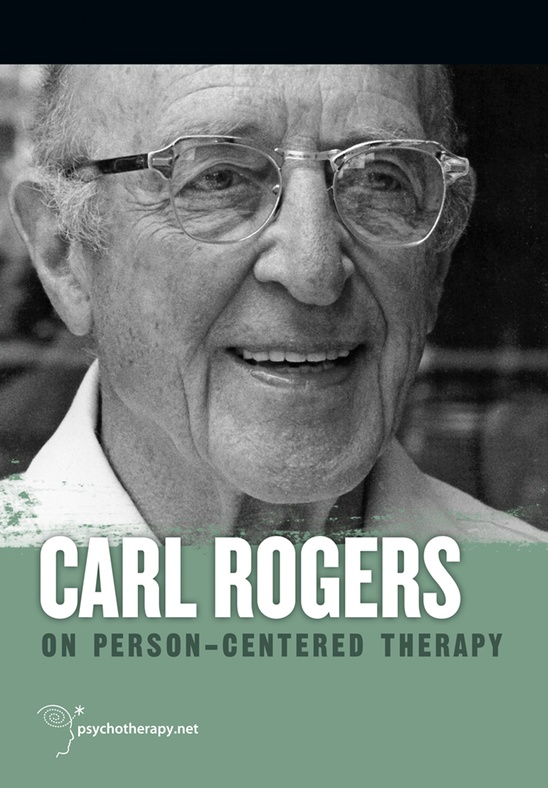
Carl Rogers on Person-Centered Therapy
by Carl Rogers, Natalie Rogers
The founder of the person-centered approach reflects on his major contributions and explores his provocative opinions on psychotherapy, education, and social change.


Don’t miss this rare opportunity to get up close and personal with the man named the single most influential psychotherapist of the past quarter-century. In this historic interview with Carl Rogers, filmed just two years before he passed away, the founder of the person-centered approach reflects on his major contributions and explores his provocative opinions on a wide range of topics including therapy, education, and social change.
With thoughtfulness, authenticity, and humility, Rogers shares himself in such a way that viewers really get a sense of who he is as a person, as he discusses a range of topics, from how his early upbringing influenced the development of his person-centered approach to his peace-building work with Protestants and Catholics in Northern Ireland. Throughout the interview, his “way of being”—which is the heart of his approach—shines through, revealing a man who passionately believes in the goodness of human nature and cares deeply about contributing to a better world.
This video also features an original interview with Carl’s daughter, Dr. Natalie Rogers, who sits down with Victor Yalom and offers her unique reflections and perspectives on her father’s life and work.
By watching this video, you will:
- Understand the philosophical stance behind the person-centered approach.
- Learn Rogers’s core conditions necessary to bring about change in psychotherapy.
- Identify Rogers’s key contributions to psychology and psychotherapy.
View Cart (0)
Order
Usually ships within 1 - 3 days
Individual License
(what's this?)
|
Group License
(what's this?)
|
||||||||||||||||||
CE Course
(what's this?) 2.0 CREDITSRequired: watch video (sold separately)
|
|||||||||||||||||||
"This interview contains ideas that were prescient. Further, these views continue to provoke interesting, cutting-edge scholarship, which speaks to the power of Rogers’s ideas—ideas that, a half century after they were proposed, still reverberate in our current political and psychological climate. It will be very interesting to see which currently popular psychological approaches are relevant in another half century."
- Larry Leitner, PhD, Reviewed in American Psychological Association PsycCRITQUES

In Depth
Specs
Bios
Reviews
CE Course
"I think the notion that the inner core of the person is really trustworthy and positive--I think that has been an emphasis that has had a real impact on all kinds of fields and that I have helped to contribute to that." –Carl Rogers responding to his interviewer’s question about his major contributions
This interview was originally filmed for the Royal Television of Ireland in 1985 when Carl Rogers was 83 years old, but it has never before been made widely available. We found out about this interview going through a box of videotapes held by Carl's daughter Natalie, obtained permission to produce this as a DVD, and recorded an introduction and concluding discussion with Natalie Rogers and Victor Yalom.
In a 2006 survey reported in the March/April 2007 Psychotherapy Networker Carl Rogers is named as the single most influential psychotherapist of the past quarter-century - by a landslide. A pioneer in humanistic psychology whose views were once considered radical, his person-centered approach eventually became foundational to counseling and psychotherapy, and it’s hard to find a therapist these days who wasn’t, to one degree or another, influenced by Carl Rogers. Both Emotionally Focused Therapy (Sue Johnson) and Motivational Interviewing (Bill Miller and Stephen Rollnick)--two very popular evidence-based approaches to therapy with individuals and couples—are rooted in Rogers’s person-centered approach.
Nominated for the Nobel Peace Prize in 1987, Rogers’s influence extends beyond psychology into education and conflict resolution, and here he talks extensively about his work in these areas as well.
If you want to learn about the person-centered approach, reading about it will only get you so far, as it is primarily about the presence of the therapist rather than any technique. By watching this interview with Rogers and getting a sense of who he is as a person, you’ll have a much deeper understanding of what his approach is all about: being open, curious, and real.
This interview was originally filmed for the Royal Television of Ireland in 1985 when Carl Rogers was 83 years old, but it has never before been made widely available. We found out about this interview going through a box of videotapes held by Carl's daughter Natalie, obtained permission to produce this as a DVD, and recorded an introduction and concluding discussion with Natalie Rogers and Victor Yalom.
In a 2006 survey reported in the March/April 2007 Psychotherapy Networker Carl Rogers is named as the single most influential psychotherapist of the past quarter-century - by a landslide. A pioneer in humanistic psychology whose views were once considered radical, his person-centered approach eventually became foundational to counseling and psychotherapy, and it’s hard to find a therapist these days who wasn’t, to one degree or another, influenced by Carl Rogers. Both Emotionally Focused Therapy (Sue Johnson) and Motivational Interviewing (Bill Miller and Stephen Rollnick)--two very popular evidence-based approaches to therapy with individuals and couples—are rooted in Rogers’s person-centered approach.
Nominated for the Nobel Peace Prize in 1987, Rogers’s influence extends beyond psychology into education and conflict resolution, and here he talks extensively about his work in these areas as well.
If you want to learn about the person-centered approach, reading about it will only get you so far, as it is primarily about the presence of the therapist rather than any technique. By watching this interview with Rogers and getting a sense of who he is as a person, you’ll have a much deeper understanding of what his approach is all about: being open, curious, and real.


Stream
Carl Rogers (1902–1987) is one of the most influential psychologists in American history. His contributions are outstanding in the fields of education, counseling, psychotherapy, peace, and conflict resolution. A founder of humanistic psychology, he has profoundly influenced the world through his empathic presence, his rigorous research, his authorship of sixteen books and more than 200 professional articles. His best known books are: On Becoming a Person, Client Centered Therapy, Freedom to Learn, A way of Being, Carl Rogers on Personal Power, and Becoming Partners: Marriage and Its Alternatives. 
We invite you to share your
Help
Shopping Cart
Site Map
Share
Home
Join us on Facebook
Follow Us on Twitter
Need Help? Call 1-800-577-4762